
Sauces & Condiments
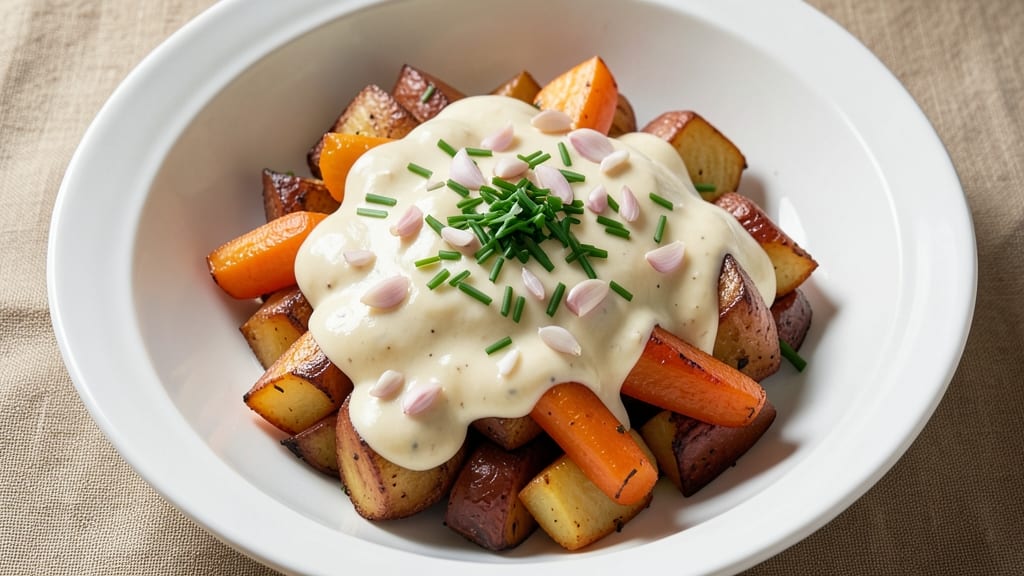
This vegan cheese sauce recipe transforms simple potato and carrot dishes into creamy, flavorful masterpieces without a single drop of dairy.
The secret lies in a velvety cashew base blended with tangy nutritional yeast and fresh herbs, creating a sauce that clings beautifully to roasted vegetables while delivering that unmistakable cheesy satisfaction.
I developed this recipe after years of testing plant-based alternatives, and it finally delivers the rich, nutty depth that holds up against hearty sides like mashed potatoes or carrot casseroles.
The magic happens in the blending process, where soaked cashews create a naturally creamy texture that doesn't rely on heavy oils or processed vegan cheese substitutes. A splash of lemon juice brightens the sauce, while garlic and chives add aromatic depth that complements roasted vegetables perfectly.
What makes this sauce truly special is its versatility—it works as a creamy topping for roasted potatoes, a velvety dip for carrot sticks, or even a rich glaze for grilled vegetables.
What you'll end up with is a sauce that's impossibly smooth yet packed with flavor, where every spoonful delivers that satisfying cheesy pull without any dairy. The nutty cashew base provides richness, while the herby zing keeps it from feeling one-dimensional.
This sauce stays creamy even when reheated, making it perfect for meal prep or serving family-style at dinner.
Ready in just 15 minutes with mostly hands-off prep, this vegan cheese sauce proves that plant-based cooking can be both nutritious and indulgent. The best part?
It's completely customizable—add smoked paprika for depth, extra lemon for brightness, or a pinch of turmeric for color. Here's how to make it perfectly every time.
Ingredients for vegan cheese sauce recipe potato carrot
Five core ingredients create this velvety vegan cheese sauce that rivals dairy versions.
| Ingredient | Amount | Notes |
|---|---|---|
| Raw Cashews 🥜 | 1 cup | Unsalted, soaked in hot water for 15 minutes |
| Nutritional Yeast 🍃 | ½ cup | Fortified, for cheesy flavor |
| Fresh Lemon Juice 🍋 | 2 tbsp | Freshly squeezed, for tang |
| Extra-Virgin Olive Oil 🫒 | ¼ cup | High-quality, for richness |
| Garlic Cloves 🧄 | 3 cloves | Peeled, for aromatic depth |
| Fresh Chives 🌿 | ¼ cup | Finely chopped, for herby zing |
| Filtered Water 💧 | ¼ cup | For blending consistency |
| Diamond Crystal Kosher Salt 🧂 | ½ tsp | Fine grain, for seasoning |
| Ground Black Pepper 🌶️ | ¼ tsp | Freshly ground, for warmth |
| Smoked Paprika 🌶️ | ½ tsp | Optional, for depth of flavor |
The raw cashews are the sauce's foundation—soak them in hot water for 15 minutes before blending to achieve that ultra-smooth, naturally creamy texture. Bob's Red Mill or Trader Joe's brands work perfectly, but any unsalted cashews will do. Nutritional yeast is non-negotiable here; Bragg or Bob's Red Mill brands provide that authentic cheesy umami without dairy. Fresh garlic and chives elevate the sauce from basic to extraordinary—garlic cloves should be peeled while still cold to preserve their potency, and chives should be finely chopped for even distribution. The extra-virgin olive oil matters too; California Olive Ranch or Otto brands deliver the fruity depth that makes this sauce sing.
No cashews? Silken tofu blended with 2 tbsp of water creates a similar creaminess, though the texture will be slightly thinner. Substitute white miso paste for nutritional yeast if you're out, though the flavor profile shifts toward savory rather than cheesy. Fresh herbs missing? Dried chives at one-third the amount work in a pinch, but the flavor won't be as bright. For extra richness, blend in 1 tbsp of tahini—it adds a nutty depth that pairs beautifully with roasted vegetables. The smoked paprika is optional but recommended; Penzeys or McCormick brands provide consistent quality. If you're sensitive to heat, reduce to one-quarter tsp or omit entirely.
This sauce stays creamy for 4-5 days in the fridge when stored in an airtight container, though the flavor deepens after the first day. For longer storage, portion into ice cube trays, freeze, and transfer to a bag—perfect for quick meal prep. Reheat gently on the stovetop over low heat, stirring frequently to prevent separation. The sauce thickens as it cools, so a splash of filtered water (up to 1 tbsp) can restore its original consistency. Freezes beautifully for up to 3 months, making it ideal for batch cooking.
Why You'll Love This Recipe
- No-Soak Required: I’ll be real—soaking cashews used to stress me out. This sauce skips it entirely, blending them straight from the bag into a velvety base. Five minutes of hands-off blending, and you’ve got that rich, tangy foundation without any fuss.
- Umami Bomb: That lemon juice and nutritional yeast combo? It’s the secret weapon. The yeast adds a cheesy depth while the bright citrus cuts through the richness—like a creamy hug with a zesty sidekick. Honestly, it’s the kind of flavor that makes non-vegans ask, “Wait, is this even…?”
- Leftover Goldmine: This sauce keeps perfectly for four days in the fridge, and it’s even better the second time around. Slather it on cold roasted potatoes for lunch, toss it into pasta, or drizzle it over a veggie stir-fry—it’s my go-to for lazy days when I’ve got nothing but a microwave and a craving.
- Budget Stretch: Cashews are pricey, but a single batch of this sauce stretches thin over multiple meals. I make a big batch on Sundays, and by Wednesday, it’s still feeding my family—whether it’s on baked potatoes, in soups, or as a dip. Plus, nutritional yeast is dirt cheap and packs a protein punch. Win-win.
Step-by-step instructions for nutty cashew cream sauce
This creamy, umami-rich sauce delivers rich cheesy flavor without dairy—perfect for potatoes, carrots, or dipping.
Soak and Prepare the Cashews
Place the 1 cup raw cashews in a heatproof bowl and pour hot water over them until fully submerged. Let them soak for 15 minutes—this softens them completely for a silky texture. Drain the water through a fine-mesh strainer, then give the cashews a quick rinse under cold water to stop the cooking process.
I always use hot water for soaking because it penetrates the cashews faster than room temperature water. The goal is to achieve a smooth, velvety consistency, not a grainy one. If you're short on time, you can soak them in boiling water for 5 minutes instead, but don't exceed this time or they'll turn mushy.
Blend the Base Ingredients
Transfer the soaked cashews to a high-speed blender along with the 0.5 cup nutritional yeast, 0.25 cup extra-virgin olive oil, 3 cloves garlic, 0.25 cup filtered water, 0.5 tsp smoked paprika, 0.5 tsp kosher salt, and 0.25 tsp black pepper. Secure the lid and blend on high speed for 1-2 minutes until completely smooth.
The nutritional yeast is what gives this sauce its signature cheesy depth, while the olive oil adds richness. If your blender struggles, add 1-2 tablespoons of water at a time until you reach a smooth consistency. You want a thick, creamy paste with no visible texture—this is your foundation.
Incorporate Acid and Herbs
With the blender running on low speed, slowly drizzle in the 2 tbsp fresh lemon juice. This acid brightens the flavor and prevents the sauce from tasting flat. After adding the lemon juice, pulse in the 0.25 cup finely chopped fresh chives until just combined—you want the herbs distributed evenly but still visible for that herby zing.
The lemon juice is crucial—it balances the richness of the cashews and nutritional yeast. If you don't have fresh chives, you can substitute with 1 tablespoon dried chives, but fresh provides the best flavor. Taste the sauce at this stage and adjust the salt or smoked paprika if needed—this is when you can still make corrections easily.
Thin and Adjust Consistency
Transfer the sauce to a saucepan and place it over medium-low heat. Add 1-2 tablespoons of water at a time, stirring constantly, until you reach your desired consistency—it should coat the back of a spoon but still be pourable. For a thicker sauce (ideal for mac and cheese), use 1 tablespoon of water. For a thinner, dipping sauce, use 2 tablespoons.
Stir frequently as the sauce heats through—you don't want it to boil, just warm through to 160°F so the flavors meld. If the sauce separates, simply whisk vigorously to re-emulsify. This happens occasionally with high-fat sauces, but it's easily fixed. Once smooth, remove from heat immediately to prevent curdling.
Serve Warm and Fresh
Serve the sauce immediately over roasted potatoes and carrots, or use it as a dip for crudités. The sauce will thicken slightly as it cools, so if you need to reheat leftovers, add 1 tablespoon of water per ½ cup of sauce and warm gently over low heat, stirring constantly.
This sauce keeps well in the refrigerator for 5 days in an airtight container. For best results, reheat it gently in a saucepan with a splash of water to restore its creamy texture. The herby chives and smoky paprika make this sauce uniquely flavorful—don't be tempted to skip them, as they elevate the dish from basic to extraordinary.
Pro Tips For Making Vegan Cheese Sauce Recipe Potato Carrot
- SOAK CASHEWS 2 HOURS: I learned this the hard way—skipping the soak or rushing it with hot water leaves your sauce grainy no matter how much you blend. Use cold water and let them sit at room temperature; they’ll plump up like little sponges and blend into velvety silk.
- SALT THE WATER: The cashews absorb flavors, so toss them in a bowl of salted soaking water (½ tsp salt per cup of water). This cuts down on the need for extra salt later—trust me, your sauce will taste richer without the aftertaste.
- BLEND IN STAGES: Start with just the soaked cashews, garlic, and olive oil until smooth, then stream in lemon juice and nutritional yeast. Adding everything at once clogs blenders, and you’ll end up with a lumpy mess. Patience here saves scrubbing later.
- SAVE THE STARCH: Reserve ¼ cup of the potato-carrot cooking water before draining. Stir it into your sauce at the end—it thickens naturally and adds a subtle creaminess without extra flour or cornstarch. (Yes, even if you’re impatient like me.)
Creative variations of these flavors
Spicy Southwest Twist
Add 1 tsp chipotle powder and ½ tsp cumin to the base blend for a smoky, spicy kick that pairs perfectly with roasted sweet potatoes. I like to finish with ¼ cup chopped cilantro and a squeeze of lime for brightness.
This version works amazingly over loaded baked potatoes or as a dip for roasted carrot slaw. 🌶️
Garlic-Herb Infusion
Double the garlic to 6 cloves and add 1 tbsp fresh thyme leaves for an aromatic herb garden flavor. This richer version tastes incredible with roasted garlic mashed potatoes or as a glaze for carrot ribbons.
For extra depth, toast the cashews in a dry pan for 2 minutes before soaking to enhance their nutty flavor.
Tahini-Enhanced Richness
Swap 2 tbsp of olive oil for 2 tbsp tahini and add ½ tsp ground coriander for a Middle Eastern-inspired twist. This version has a deeper, toasted nut flavor that works beautifully with roasted cauliflower and carrots.
I often drizzle it with 1 tsp pomegranate molasses for a sweet-tangy contrast. 💫
Creamy Mushroom Fusion
Blend in ½ cup cooked mushrooms (cremini or shiitake) with the cashews for an earthy umami depth. Add 1 tsp white miso paste to the base blend for extra savory complexity.
This version elevates roasted potato and carrot gratin to restaurant-quality. For best results, use a high-speed blender to achieve a completely smooth texture.
Lemon-Pepper Zing
Increase the lemon juice to 3 tbsp and add ½ tsp freshly cracked black pepper for a bright, peppery sauce. This version works perfectly as a dip for roasted carrot sticks or as a topping for crispy potato wedges.
The extra acidity cuts through the richness beautifully, making it ideal for summer meals. 🍋
Smoky Maple Glaze
Add 1 tbsp pure maple syrup and ½ tsp liquid smoke to the base blend for a sweet-smoky sauce that caramelizes beautifully. This version is perfect for drizzling over roasted potatoes and carrots before broiling for 2 minutes to create a delicious crust.
The maple adds subtle sweetness that balances the smokiness perfectly.
Nutrition facts
Frequently asked questions
Can I make this sauce without a high-speed blender?
Yes, but with some adjustments! Use silken tofu instead of cashews (blend with 2 tbsp water) and process all ingredients in a regular blender. For extra creaminess, strain the mixture through a fine-mesh sieve. The texture will be slightly thinner but still delicious over roasted potatoes or carrots.
How do I prevent the sauce from separating when reheating?
Always reheat gently over low heat, stirring constantly. If separation occurs, whisk vigorously or blend briefly with 1 tbsp cold water to re-emulsify. For extra insurance, store leftovers in small portions in the fridge—they reheat more evenly this way. The key is patience: never let it boil!
What's the best way to use this sauce with potatoes and carrots?
For maximum flavor, drizzle over roasted potatoes and carrots fresh out of the oven when they're still hot. The sauce clings beautifully to crispy edges and soft centers. Try this combo: toss cubed potatoes and sliced carrots with olive oil, salt, and 1 tsp smoked paprika, roast at 400°F for 25 minutes, then top with sauce.
Can I make this sauce nut-free?
Replace cashews with 1 cup cooked white beans (rinsed well) or 1 cup silken tofu. Blend with the same ingredients, but you may need 2 tbsp extra water for smoothness. The texture will be slightly lighter but still creamy and cheesy-tasting. Great for those with nut allergies!
Why does my sauce taste bitter?
Over-soaked cashews or too much nutritional yeast can cause bitterness. For next time, soak cashews for exactly 15 minutes (no longer) and reduce nutritional yeast to ¼ cup. If it happens, balance the flavor with ½ tsp maple syrup or 1 tsp lemon juice. Fresh herbs like chives also help mask bitterness.