
Side Dishes
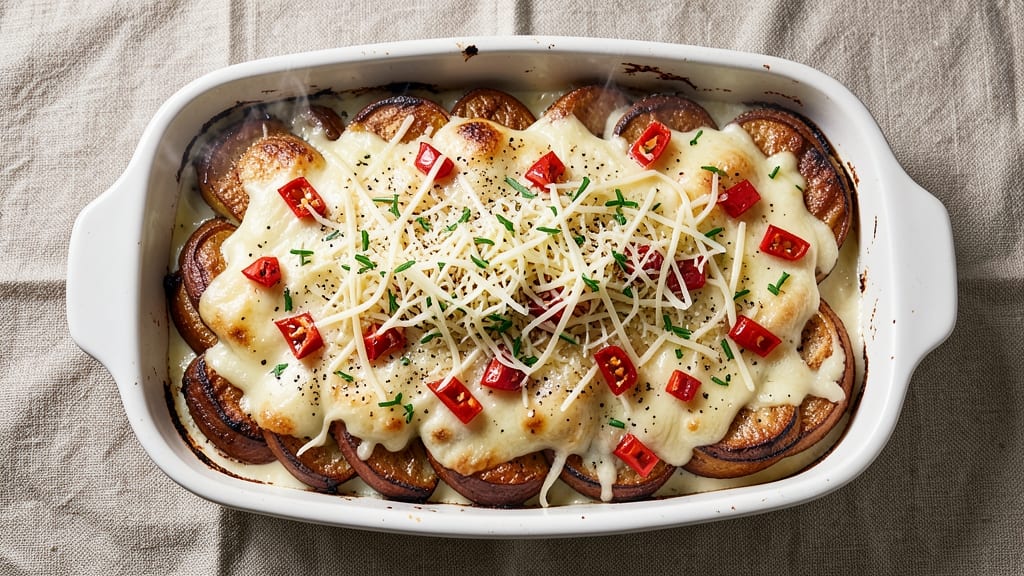
This baked potato gratin recipe transforms humble potatoes into a luxurious side dish with a crispy golden crust and layers of creamy, cheesy goodness. The secret lies in thinly slicing the potatoes and layering them with rich Gruyère and sharp cheddar, then baking until bubbly and caramelized. I've perfected this technique to ensure every bite delivers that perfect balance of texture and flavor—crispy on top, tender inside, with melty cheese throughout.
The process is simpler than it looks: slice potatoes paper-thin, layer them with cheese and cream, then bake until the top turns golden and the edges are slightly crisp. No fancy equipment needed—just a baking dish and patience for the layers to meld together.
This dish is foolproof for weeknight dinners or holiday gatherings, always a crowd-pleaser that disappears faster than you can say "cheese pull."
What makes this gratin special is how the flavors develop as it bakes—potatoes soak up the creamy cheese sauce while forming a crispy, caramelized crust on top. The result is a dish that feels indulgent but doesn't require hours in the kitchen.
Serve it alongside roasted meats or as a hearty vegetarian main with a fresh green salad.
For extra crunch, sprinkle breadcrumbs on top before baking, or add a touch of nutmeg to the cheese mixture for depth. The possibilities are endless, but the foundation remains the same: thin slices, proper layering, and the perfect bake. Let's get started on creating this comforting, cheesy masterpiece.
Ingredients for baked potato gratin
Thinly sliced potatoes, rich cheeses, and a velvety cream sauce create this luxurious gratin.
| Ingredient | Amount | Notes |
|---|---|---|
| Russet Potatoes 🥔 | 3 lb | Thinly sliced (1/8-inch thick) |
| Gruyère Cheese 🧀 | 1 ½ cups | Freshly grated, block preferred |
| Sharp White Cheddar Cheese 🧀 | 1 ½ cups | Freshly grated, aged for sharpness |
| Heavy Cream 🥛 | 1 ½ cups | Full-fat for richness |
| Whole Milk 🥛 | ½ cup | Warmed for better blending |
| Butter 🧈 | 4 tbsp | Unsalted, melted |
| Garlic Cloves 🧄 | 3 cloves | Minced for subtle flavor |
| Salt 🧂 | 1 ½ tsp | Diamond Crystal preferred |
| Black Pepper 🌶️ | ½ tsp | Freshly ground for best flavor |
| Nutmeg 🌿 | ¼ tsp | Freshly grated for depth |
| All-Purpose Flour 🌾 | 2 tbsp | For thickening sauce |
| Breadcrumbs 🍞 | ¼ cup | Panko for extra crunch |
The potatoes are the foundation—Russets are ideal for their starchy texture, but Yukon Golds work too. Walmart or local grocery stores usually carry them in bulk. Thinly slice them (1/8-inch thick) using a mandoline for evenness—Costco sells one that’s perfect for this. For the cheeses, Gruyère from specialty shops adds nutty depth, while sharp white cheddar brings tang. If you can’t find Gruyère, Emmental works in a pinch. The key is grating them fresh—pre-shredded cheese has anti-caking agents that prevent proper melting. Store potatoes in a cool, dark place for up to 2 weeks; cheeses keep in the fridge for 3-4 months.
No heavy cream? Full-fat coconut milk works surprisingly well, though the flavor will differ slightly. Substituting sharp cheddar for Gruyère? Add a pinch of smoked paprika to mimic the Gruyère’s depth. For the nutmeg, ground works at half the amount, but freshly grated is worth the effort. The breadcrumbs can be swapped for crushed Ritz crackers or panko—just toast them lightly in butter first. If you’re short on time, pre-sliced potatoes from the grocery store (like those in the salad section) save chopping time, though they’re less uniform. The garlic can be jarred minced if fresh isn’t available, but fresh is always better.
Prep ahead by slicing potatoes and grating cheeses a day in advance—they’ll keep well in the fridge. Assemble the gratin up to 4 hours before baking; cover and refrigerate. For the best crust, broil the gratin for the final 2-3 minutes—watch it like a hawk to avoid burning. Leftovers reheat beautifully: cover with foil and warm in a 350°F oven for 15-20 minutes. This gratin freezes well too—portion into single-serving containers and freeze for up to 3 months. Thaw overnight in the fridge before reheating.
Why You'll Love This Recipe
- Honestly, this works for both: toss it together for a lazy Tuesday dinner, or bring it to a potluck and watch people ask for seconds. The leftovers reheat like a dream (yes, even the crispy top), and it’s the kind of dish that makes you look like a pro without trying.
- One-Pan Magic: I swear by this recipe when I’m too tired to scrub pots—just slice, layer, and bake. The Russets hold their shape while soaking up that creamy Gruyère-cheddar mix, and the milk-heavy cream combo turns everything into one golden, melty mess with zero extra dishes.
- Cheese Pulls Hard: Between us, Gruyère and sharp white cheddar are a match made in heaven—nutty, sharp, and just salty enough to make you crave another bite. The slow bake lets the cheese stretch into that perfect stringy pull, while the edges stay crisp enough to hold a fork.
- Weeknight or Guest Night: Honestly, this works for both: toss it together for a lazy Tuesday dinner, or bring it to a potluck and watch people ask for seconds. The leftovers reheat like a dream (yes, even the crispy top), and it’s the kind of dish that makes you look like a pro without trying.
Step-by-step instructions for baked potato gratin
Mastering this dish comes down to precise layering and timing—here's how to achieve that perfect golden crust and creamy interior.
Prepare the Potato Layers
Begin by preheating your oven to 400°F. Peel the 3 lb Russet Potatoes and slice them into 1/8-inch thick rounds using a mandoline or sharp knife. I like to work in batches to maintain consistency—each slice should be uniform for even cooking.
Arrange the potato slices in a single layer on a baking sheet and toss them with 1 tbsp of the melted butter, ½ tsp of the salt, and ¼ tsp of the black pepper. This initial seasoning ensures every layer develops flavor. Spread them out so they don't overlap, then microwave for 2 minutes to soften slightly. This prevents them from absorbing too much liquid during baking and keeps them tender.
Build the Cheese Mixture
In a large bowl, combine the 1.5 cups Heavy Cream, 0.5 cup Whole Milk, 4 tbsp Butter, 1.5 tsp Salt, 0.5 tsp Black Pepper, 0.25 tsp Nutmeg, and 2 tbsp All-Purpose Flour. Warm the milk and cream together in a saucepan over medium heat until steaming but not boiling—this helps the flour blend smoothly without clumping.
Remove from heat and whisk in the flour until the mixture thickens slightly, about 1-2 minutes. Then stir in the 1.5 cups Gruyère Cheese and 1.5 cups Sharp White Cheddar Cheese until fully melted and smooth. The cheese should be completely incorporated, with no visible lumps. Let this mixture cool slightly while you assemble the gratin.
Assemble the Gratin
Grease a 9x13-inch baking dish with butter and arrange half of the potato slices in a single layer on the bottom, slightly overlapping. Pour half of the cheese mixture evenly over the potatoes, then add the remaining potato slices. Finally, spread the rest of the cheese mixture over the top, creating a perfectly even surface.
Sprinkle the 0.25 cup Breadcrumbs evenly over the top for texture, then cover the dish with foil. Bake for 45 minutes at 400°F, then remove the foil and bake for another 15 minutes until the top is golden brown and bubbly. The edges should be crispy while the center remains creamy.
Finish and Rest
Remove the gratin from the oven and let it rest for 10 minutes before serving. This resting period allows the layers to set slightly, making it easier to slice. The interior should be tender enough that a knife slides in easily, while the top remains crispy.
Garnish with extra freshly grated Gruyère Cheese and freshly ground black pepper before serving. The gratin should have a rich, velvety texture with a crispy, golden crust that holds its shape. Serve immediately while warm for the best experience.
Pro Tips For Making Baked Potato Gratin
- PARBOIL POTATOES FIRST: I learned this the hard way—skipping the parboil means your gratin will turn into a gluey mess. Slice your Russets ¼-inch thick, boil them in salted water for exactly 3 minutes, then drain and pat thoroughly dry. This step guarantees creamy layers instead of a sad, watery puddle.
- SALT THE CHEESE MIX: Don’t assume your cheeses are seasoned enough. Before combining Gruyère and sharp white cheddar, sprinkle in ½ teaspoon of flaky salt per cup of cheese—Gruyère’s nutty richness and cheddar’s sharpness need that extra punch. Trust me, your gratin will taste like it came from a bistro, not a shortcut.
- LOW AND SLOW CRUST: Watch the heat after the first 20 minutes—this is where most people rush and end up with a burnt top. Switch to 325°F (165°C) and bake until the edges are golden and the center jiggles just slightly when shaken. That last 15 minutes at lower temp makes all the difference between "meh" and "wow."
- SKIP THE PRE-GRATIN BREADCRUMB: I used to add a breadcrumb layer for crunch, but it just gets soggy. Instead, after the initial bake, broil for 2-3 minutes with a sprinkle of coarse salt and a pat of cold butter on top. The butter melts into a crispy, salty blanket—no extra effort, all the flavor.
Pro cooking tips for great baked potato gratin
Layer Like a Pro
Start by arranging potato slices in a single layer—this ensures even cooking and prevents soggy centers. I like to overlap slices slightly for stability, but never stack more than 3 layers at a time.
For extra insurance, pre-cook the potatoes for 2 minutes in the microwave before layering; this jumpstarts the cooking process and prevents waterlogging. 🥔
Use a 9x13-inch baking dish—it’s the perfect size for even heat distribution. Grease it thoroughly with butter to prevent sticking, especially if you’re using a non-stick dish. I swear by Lodge brand for its durability and even heat transfer.
When adding the cheese mixture, spread it evenly to avoid thick spots that could burn before the center cooks.
Cheese Temperature Matters
Never use cold cheese straight from the fridge—it won’t melt smoothly and can create lumps. Let your Gruyère and cheddar sit at room temperature for 15-20 minutes before grating.
For the sauce, warm the heavy cream and milk just until steaming (160°F internal temp), then whisk in the flour to create a roux—this thickens the sauce without clumping. 🧀
If your cheese mixture separates, simply reheat it gently over low heat while stirring constantly. For extra richness, I sometimes add 1 tbsp of Dijon mustard to the sauce—it cuts through the fat and adds depth.
Just be sure to taste and adjust the seasoning before assembling; gratin flavors intensify during baking.
Baking with Confidence
Cover the gratin with heavy-duty aluminum foil during the first 45 minutes to trap steam and help the potatoes cook evenly. After removing the foil, watch closely for the golden brown crust—this is your signal to broil for the final 2-3 minutes for extra crispiness.
I use an oven thermometer to confirm my oven runs at 400°F—many home ovens run hot or cold, and accuracy is key. ⏰
For a restaurant-quality finish, sprinkle toasted breadcrumbs mixed with 1 tbsp melted butter over the top before the final bake. This adds texture and prevents the cheese from browning too quickly.
If the top starts to brown too fast, tent it loosely with foil to protect it while the center finishes cooking.
Resting for Perfection
Never skip the 10-minute rest after baking—this allows the layers to set and makes slicing effortless. The gratin will continue steaming, distributing flavors and juices evenly. I like to tent it with foil during this time to keep it warm.
For serving, run a thin knife along the edges of the dish to loosen it, then slide the gratin onto a serving platter. 💡
If you’re making this ahead, assemble the gratin up to 4 hours before baking and refrigerate uncovered. This helps the potatoes absorb some of the moisture, resulting in a creamier texture. When ready to bake, add 5-10 extra minutes to the cooking time to account for the cold start.
Leftovers? Reheat covered with foil at 350°F for 15-20 minutes—just add a splash of milk to revive the sauce if needed.
Nutrition facts
Frequently asked questions
Can I use sweet potatoes instead of Russets?
Sweet potatoes work beautifully and add a natural caramelized sweetness to the dish. Use the same slicing technique (1/8-inch thick) and adjust the seasoning—reduce the salt slightly since sweet potatoes are naturally salty. For extra depth, add a pinch of cinnamon or smoked paprika to the cheese mixture.
Why did my gratin turn out watery?
Watery results usually happen when potatoes release too much moisture. To prevent this, microwave the sliced potatoes for 2 minutes before layering to draw out excess starch. Also, ensure your baking dish is large enough (a 9x13-inch dish works best) and don't overfill it—potatoes should fit snugly but not be packed tightly.
Can I make this gratin ahead of time?
Yes! Assemble the gratin up to 4 hours ahead and refrigerate uncovered. This helps the potatoes absorb moisture, resulting in an even creamier texture. When ready to bake, add 5-10 extra minutes to the cooking time. For a make-ahead main course, bake it completely, then refrigerate and reheat covered at 350°F for 15-20 minutes.
What's the best way to reheat leftovers?
Cover the gratin with foil and reheat at 350°F for 15-20 minutes. For extra creaminess, add a splash of milk or heavy cream before reheating. If the top gets dry, tent it with foil during the first 10 minutes of reheating, then uncover to crisp up the crust again.
Can I substitute the heavy cream?
For a lighter version, use whole milk instead of heavy cream, but the texture will be less rich. For a dairy-free option, try full-fat coconut milk (add 1 tbsp cornstarch to thicken). If using half-and-half, add an extra 1 tbsp butter to maintain richness. The key is maintaining the sauce's velvety consistency—adjust thickness with flour or cornstarch as needed.