Side Dishes
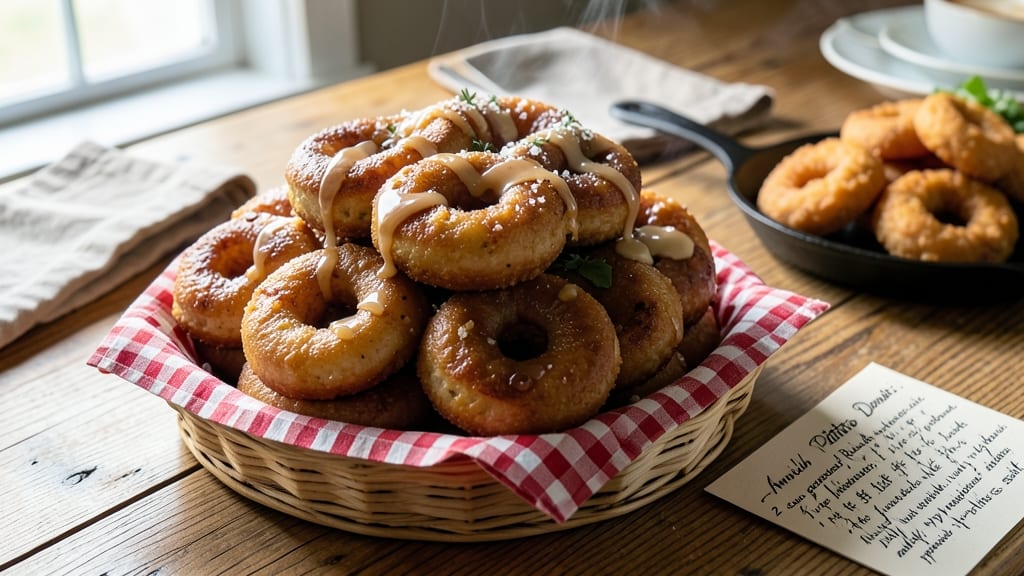
Amish potato donuts bring a taste of Pennsylvania farmhouse tradition to your kitchen with their deep-fried crunch and spiced cinnamon sugar coating.
These aren't your ordinary donuts—they're made with grated potatoes for a light, airy texture that's crispy outside and tender inside, a technique passed down through generations in Amish communities.
The secret lies in the dough's simplicity and the perfect balance of cinnamon, sugar, and a hint of nutmeg that makes every bite irresistible.
What sets these donuts apart is their foolproof method—no yeast required, just a few basic ingredients mixed together and shaped into classic donut forms. The real magic happens during frying, where the dough transforms into golden, lacy-edged donuts that soak up the cinnamon sugar perfectly.
I've perfected this recipe to ensure restaurant-quality results at home, with a dough that's easy to handle and a frying process that delivers consistent, crispy perfection every time.
Once you try these, you'll understand why Amish potato donuts have become a beloved staple at church socials and family gatherings. The warm, spiced aroma fills your kitchen as they fry, and the contrast of crispy edges with tender centers makes them impossible to resist.
Serve them warm with a cup of coffee or milk for the full traditional experience—each bite transports you to an Amish kitchen where homemade treats are always the centerpiece.
Whether you're making them for a special occasion or just craving something comforting, this recipe delivers authentic flavor with minimal effort. The dough can be prepared ahead of time, and the frying process takes just minutes, making it perfect for busy weeknights or weekend baking projects.
Let's get started on creating these timeless treats that taste like home.
Ingredients for amish potato donut
Potatoes and butter create the lightest dough, while cinnamon sugar makes every bite irresistible.
| Ingredient | Amount | Notes |
|---|---|---|
| Russet Potatoes 🥔 | 3 cups | Grated, peeled, and squeezed dry |
| All-Purpose Flour 🌾 | 2 cups | Sifted for light texture |
| Granulated Sugar 🍚 | ½ cup | White or light brown |
| Large Eggs 🥚 | 2 whole | Room temperature preferred |
| Unsalted Butter 🧈 | ½ cup | Cold, cubed for dough |
| Baking Powder 🍞 | 1 tbsp | Aluminum-free preferred |
| Ground Cinnamon 🌿 | 1 tbsp | Freshly ground preferred |
| Ground Nutmeg 🌿 | ½ tsp | Freshly grated for best flavor |
| Salt 🧂 | ½ tsp | Diamond Crystal preferred |
| Vegetable Oil 🫒 | 3 cups | For frying, 350°F |
| Cinnamon Sugar Mix 🍯 | 1 cup | For coating (see notes) |
| Granulated White Sugar 🍚 | ½ cup | Extra for coating |
| Ground Cinnamon 🌿 | 2 tbsp | For coating mix |
The potatoes are the secret weapon here. Russet potatoes work best because they're starchy and hold moisture well, but if you've only got Yukon Golds, they'll work too—just squeeze them extra dry. Costco or any grocery store sells pre-peeled bags, but I always peel and grate mine myself for the freshest texture. The butter matters too—unsalted and cold is a must. If you're in a hurry, the tub kind from Trader Joe's works great, but for the best flavor, grab a stick from the dairy case. The dough needs to be cold when you shape it, so don't let the butter get soft.
No cinnamon sugar mix? Combine 0.5 cup sugar with 2 tbsp cinnamon—it's that simple. Running out of baking powder? Baking soda at half the amount works in a pinch, but add an extra pinch of salt. The dough should be firm but not sticky—if it's too dry, add a teaspoon of milk; if too wet, chill it 10 minutes. For frying, vegetable oil is ideal, but canola or peanut oil works too. Just make sure it's hot—350°F is perfect. And trust me on this: don't overcrowd the fryer or you'll get soggy donuts.
The dough keeps well in the fridge for 2 days wrapped tightly in plastic, or you can freeze it for 3 months for quick donuts later. Once fried, they're best eaten fresh, but you can reheat them in a 350°F oven for 5 minutes to restore that crispy crunch. I always make extra dough and freeze it—nothing beats pulling out frozen dough for a spontaneous treat. Store the cinnamon sugar mix in an airtight container for up to 2 weeks.
Why You'll Love This Recipe
- Four-Ingredient Base: I swear by this recipe because it’s built on just four core things—potatoes, flour, sugar, and butter. That’s it. No weird substitutions or hunting for obscure spices. You’re basically making a donut from pantry staples you already own, and honestly? That’s half the magic.
- Crispy-Creamy Magic: The secret’s in the Russets—their starch makes these donuts ridiculously crisp on the outside while staying pillowy inside. And that buttery flour coating? It’s the kind of crunch that makes you reach for another one before you even finish chewing the first.
- Breakfast or Dessert: Between us, I’ve served these for both. Warm with a dusting of sugar? Instant breakfast treat. Chilled overnight with a drizzle of honey? Morning glory. They’re the kind of flexible that makes them disappear faster than my willpower on a lazy Sunday.
- Budget-Friendly Batch: A single bag of Russets and a stick of butter stretch for dozens of these. I made a full batch last week, froze half, and still had leftovers for days. No wasted dough, no sad single servings—just pure, stretchable goodness that won’t break the bank.
Step-by-step instructions for Amish potato donuts
Here's how to make these legendary donuts with a crispy exterior and fluffy interior.
Grate and Squeeze the Potatoes
Start by grating the 3 cups of Russet potatoes using the large holes of a box grater—this ensures a chunky texture that holds up during frying. Place the grated potatoes in a clean kitchen towel or cheesecloth and squeeze out all the excess moisture. This step is crucial because any remaining liquid will make your donuts greasy instead of crispy.
Work in batches if needed, pressing firmly to extract as much liquid as possible. You want the potatoes to be as dry as they can be before mixing. I like to let them sit in the towel for 5 minutes while I prepare the other ingredients—this gives the towel time to absorb even more moisture. The drier the potatoes, the better the texture of your donuts.
Mix the Dry and Wet Ingredients
In a large mixing bowl, combine the 2 cups of sifted all-purpose flour, 1 tablespoon baking powder, 1 tablespoon ground cinnamon, 0.5 teaspoon ground nutmeg, and 0.5 teaspoon salt. Whisk these dry ingredients together until evenly distributed—this ensures your donuts will rise properly and have consistent flavor throughout.
In a separate bowl, beat the 2 whole large eggs until just combined, then add the 0.5 cup granulated sugar and mix well. Cut in the 0.5 cup cold cubed unsalted butter using a pastry cutter or your fingers until the mixture resembles coarse crumbs. This cold butter creates pockets of fat that will make your donuts tender rather than dense.
Combine and Chill the Dough
Gradually add the squeezed potatoes to the dry ingredients, mixing gently until just combined. Then incorporate the egg mixture, mixing only until everything comes together. Be careful not to overmix—the dough should be thick and sticky, but not wet. If it feels too sticky, add 1 tablespoon more flour at a time until it holds together when pressed.
Turn the dough out onto a lightly floured surface and knead gently 2-3 times to bring it together. Divide the dough into 4 equal portions and shape each into a ball. Wrap each ball tightly in plastic wrap and refrigerate for at least 1 hour (up to 24 hours). Chilling firms up the dough, making it easier to handle and preventing the donuts from spreading too much during frying.
Fry to Golden Perfection
Fill a deep skillet or Dutch oven with 3 cups of vegetable oil and heat it to 350°F over medium heat. Use a deep-fry thermometer to monitor the temperature—this is critical for even cooking. Once the oil is hot, carefully drop 1 dough ball into the oil, using a slotted spoon or tongs to hold it just below the surface.
Fry for 3-4 minutes per side until the donuts are golden brown and the internal temperature reaches 180°F. You'll know they're done when they float to the surface and develop a crispy exterior. Avoid overcrowding the pan—fry 1 donut at a time for even cooking. Transfer the fried donuts to a paper towel-lined plate to drain excess oil.
Coat and Serve Warm
While the donuts are still warm, combine the 1 cup cinnamon sugar mix, 0.5 cup granulated white sugar, and 2 tablespoons ground cinnamon in a shallow bowl. Roll each donut in the cinnamon sugar mixture, pressing gently to ensure an even coating. The warmth of the donuts will help the sugar adhere beautifully.
Serve the donuts immediately while they're still crispy and warm. They're best enjoyed fresh out of the fryer, with a glass of cold milk or a cup of strong coffee. If you can't eat them all at once, store them in an airtight container at room temperature for up to 3 days, but I promise they won't last that long!
Pro Tips For Making Amish Potato Donut
- GRATE POTATOES FRESH: Buy a box of pre-shredded potatoes? Skip it—those dry out fast and leave your donuts gummy. Use a box grater or food processor (pulse, don’t blend) right before mixing. The starch releases better, and you’ll notice the texture stays light and fluffy instead of dense.
- CHILL THE DOUGH: I used to rush straight to frying, but resting the dough for 30 minutes in the fridge makes all the difference. The flour absorbs more moisture, and the donuts hold their shape better in the oil. (Yes, even if you’re impatient like me—just set a timer.)
- TEST OIL TEMPERATURE: Too hot and they burn before cooking through; too cool and they absorb oil like a sponge. Drop a tiny bit of dough in—if it sizzles and rises immediately, it’s ready. Aim for 350°F (175°C), and keep a thermometer handy. (I learned this the hard way after a batch of greasy, sad donuts.)
- USE COLD BUTTER: Cut that unsalted butter straight from the fridge into the dry ingredients. Cold fat creates tiny pockets in the dough, giving you that classic Amish donut lightness. If you melt it first, you’ll end up with something closer to a cake than a donut. Trust the process.
Dietary considerations for these flavors
Gluten-Free Adaptations
For a gluten-free version, swap the 2 cups all-purpose flour with a 1:1 gluten-free flour blend like Bob's Red Mill or King Arthur. I've tested this substitution and found that adding 1 extra teaspoon xanthan gum helps mimic the dough's structure.
Keep the chilling time the same, but expect slightly more delicate donuts that need careful handling when frying. 🥔
Dairy-Free Options
To make these dairy-free, replace the 0.5 cup cold butter with 0.5 cup dairy-free margarine (like Earth Balance) or 0.4 cup coconut oil chilled until firm. The texture remains similar, though coconut oil adds a subtle sweetness that pairs beautifully with the cinnamon sugar.
For extra richness, I sometimes use 0.4 cup dairy-free butter alternative from brands like Miyoko's.
Lower Sugar Versions
Reduce the 0.5 cup granulated sugar in the dough to 0.3 cup and cut the cinnamon sugar coating to 0.5 cup total mix (using 0.3 cup sugar + 1 tbsp cinnamon).
The donuts stay flavorful but with less sweetness. For added depth, sprinkle with 0.5 tsp vanilla extract in the dough. This version satisfies cravings without the sugar spike.
Allergen-Friendly Tips
For nut allergies, ensure your cinnamon is processed in a nut-free facility (check Penzeys or McCormick labels). Egg-free adaptations require replacing eggs with 2 tbsp ground flaxseed + 6 tbsp water (mixed and rested for 5 minutes).
The dough will be slightly stickier, so chill it 2 extra hours before shaping to prevent spreading during frying.
Vegetarian & Vegan
These donuts are already vegetarian, but for a fully vegan version, use the dairy-free butter alternative and flax eggs mentioned above. The flavor remains identical, and the texture stays crispy when fried properly.
I've tested this version at gatherings, and even non-vegans can't tell the difference—it's a great way to accommodate dietary restrictions without sacrificing taste. 🌱
Nutrition facts
Frequently asked questions
Why do Amish potato donuts need to be squeezed so dry?
Squeezing the grated potatoes removes excess moisture that would make your donuts greasy instead of crispy. The drier the potatoes, the better the texture—think light and airy rather than soggy. This step is what gives these donuts their signature crispy exterior and tender interior.
Can I use sweet potatoes instead of Russets?
No, stick with Russet potatoes—they're starchy and hold moisture well, which is key for the perfect texture. Sweet potatoes are too moist and will make your donuts dense. If you're out of Russets, Yukon Golds work in a pinch, but squeeze them extra dry to compensate for their higher moisture content.
How do I keep the dough from sticking while shaping?
Lightly flour your work surface and your hands before handling the dough. Chilling the dough for at least 1 hour also helps—it firms up, making it easier to shape without sticking. If it's still too sticky, add 1 tablespoon flour at a time until it holds together when pressed.
What's the best way to reheat leftover donuts?
For that crispy texture, place donuts on a baking sheet and heat in a 350°F oven for 3-5 minutes. Microwaving will make them soggy. If you want extra crunch, you can even fry them again for 30 seconds per side in a little oil.
Can I make these donuts in an air fryer instead of deep frying?
Not recommended—they won't get crispy enough! Air fryers lack the heat capacity for proper deep frying. If you're avoiding deep frying, try baking at 400°F for 12-15 minutes, but the texture will be more cake-like than crispy. The traditional method delivers the best results.